
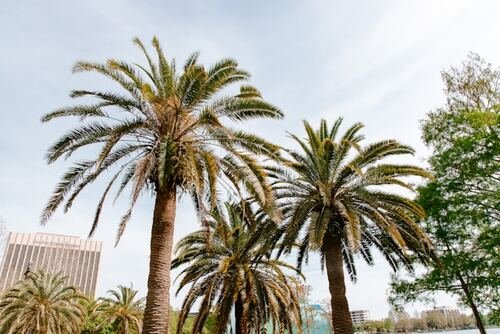
Reforesting an urban or suburban lot requires more than just planting a few saplings; it requires a strategic understanding of successional growth and canopy layers. For landscape designers, the goal is to recreate the multi-tiered structure of a natural hammock while maintaining the aesthetic polish expected by modern homeowners. A successful plan balances the immediate need for shade with the long-term goal of structural stability and environmental harmony.
When we look at the most successful luxury estates in Florida, they all share a common thread: the intelligent use of native florida trees to define boundaries and create “outdoor rooms.” By using plants that belong in this zip code, designers avoid the “yellowing” and pest issues that plague non-native palms and ornamentals.
Which Trees Form the Strongest Canopy Foundation?
Every resilient landscape needs “anchor” trees—large, long-lived specimens that define the property’s skyline.
- Live Oaks (Quercus virginiana): These provide a sprawling canopy that can lower ground temperatures by up to 10 degrees, creating a comfortable outdoor living space even in the sweltering heat of August. Their wide-reaching limbs create a sense of permanent, old-world elegance.
- Bald Cypresses (Taxodium distichum): These are unique deciduous conifers that can handle standing water, making them the perfect solution for low-lying areas of a property prone to seasonal flooding. Their feathery foliage provides a soft, ethereal texture that contrasts beautifully with more rigid architectural lines.
Why is Understory Diversity Important?
A common mistake in landscape planning is focusing solely on the “overstory.” A healthy forest has a mid-canopy layer that provides privacy and wind protection. Species like the Stopper family (Eugenia spp.) are perfect for this. They offer dense, evergreen foliage and fragrant flowers without the invasive root systems that could damage nearby hardscapes or swimming pools. The White Stopper, for instance, is famous for its clean, upright habit and ability to thrive in the dappled light beneath larger oaks.
Sourcing for Quality and Longevity
The longevity of a reforested site depends heavily on the quality of the nursery stock. Trees that have been improperly pruned or allowed to become “pot-bound” in their containers will struggle to establish in Florida’s rocky soil, often leading to failure within the first five years. Sourcing from reputable wholesalers like Treeworld Wholesale ensures that the trees have been root-pruned and grown to professional standards.
In summary, by leaning into Florida’s natural palette, designers create landscapes that don’t just look beautiful on move-in day, but continue to gain value and ecological complexity for decades. Once established (typically after one to two years), these native-heavy landscapes require significantly less intervention, allowing the homeowner to enjoy their sanctuary rather than constantly managing it.
Integrating Sustainability into the Master Plan
To conclude, strategic reforestation is about more than just aesthetics; it is about building a legacy of environmental resilience. By carefully selecting a mixture of canopy anchors and understory natives, landscape designers can create a self-sustaining habitat that mitigates urban heat and provides a wind-resistant shield for the property. This approach ensures that the landscape evolves into a mature, thriving ecosystem that requires fewer resources over time while providing maximum ecological and financial value. As you move forward with your project, prioritizing high-quality, regionally adapted stock remains the most critical step in ensuring that your vision for a restored Florida canopy becomes a permanent reality.